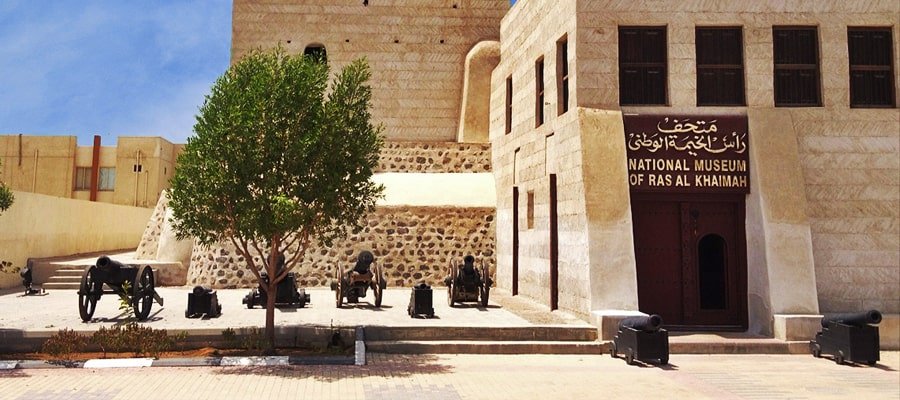
So you’re in Ras Al Khaimah — UAE’s best-kept secret — and someone mentions a museum housed inside an actual 19th-century fort that once sheltered rulers, survived two foreign attacks, and is older than some countries. You might think, “Okay, that sounds like a pretty big deal.” And you’d be absolutely right. The National Museum of Ras Al Khaimah isn’t just a museum — it’s a full-on time machine wrapped in coral stone walls, and visiting it is one of the most underrated things you can do in the UAE.
Whether you’re a history nerd, a curious traveler, or just someone looking for something genuinely cool to do in RAK, this guide has everything you need to know — including the brand-new 2025 galleries that just opened. Let’s dive in!
What Is the National Museum of Ras Al Khaimah?
The National Museum of Ras Al Khaimah (often called the RAK National Museum) is set inside the historic RAK Fort on Al Hisn Road, right in the heart of Old Town Ras Al Khaimah. The fort has been around since at least the early 1800s — with foundations dating between 1809 and 1819 — and served as the royal residence of the ruling Qawasim family until they moved to a shinier palace in 1964. After a stint as a police headquarters and prison (yes, really), the fort was transformed into a museum between 1984 and 1987.
Think about it: you’re walking through the same corridors where treaties were signed, rulers made big decisions, and history literally unfolded. Not bad for a day trip, right?
“Ras Al Khaimah is one of the few places in the world that has been continuously inhabited for over 7,000 years — and the National Museum is where that story comes alive.”
— Visit Ras Al Khaimah
A Bit of History (The Kind That Actually Blows Your Mind)
Here’s the thing about Ras Al Khaimah that most people don’t realise: this place has been a bustling hub of civilisation since 5,000 BC. Archaeological excavations have uncovered advanced trading civilisations from that era, and over 1,000 individual archaeological sites are scattered across the emirate. That’s not a small number — that’s basically a history lover’s paradise.
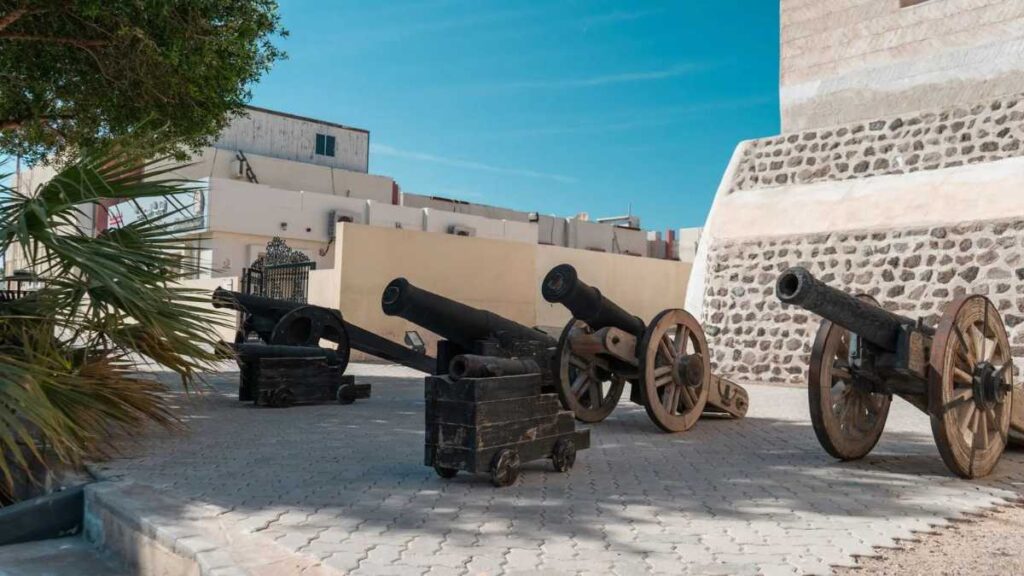
RAK’s strategic location made it a key trading link with Mesopotamia between 5,500 and 3,800 BC. By the 10th century, ancient records show RAK’s sailors and traders were reaching as far as India, China, and Zanzibar. And the ruins of Julfar — an ancient port city that was one of the most important trading hubs in the Arabian Gulf — sit right here in Ras Al Khaimah. The museum dedicates an entire gallery to this remarkable port city’s legacy.
The fort itself has quite the dramatic backstory. Ancient documents show it was destroyed at least twice — first in 1621 by the Portuguese, and again in 1820 by the British. After the British attack, a peace treaty was signed, and the fort was rebuilt and expanded into the fortified complex we see today. Drama? RAK has plenty of it.
⭐ WOW-RAK Expert Tip
The fort’s foundations date between 1809–1819, but archaeological evidence points to settlements in this exact area going back thousands of years. When you step inside, you’re not just entering a building — you’re entering a layered story that spans millennia. Take a moment to look at the coral stone walls — that’s literally the original building material used centuries ago!
The Fort: Architecture That Tells Its Own Story
Before we even get to the exhibits, let’s talk about the building itself — because the RAK Fort is genuinely stunning. Like most traditional structures in the region, it was built from coral blocks and stones, a material that’s lightweight, provides excellent insulation, and keeps buildings cool in summer and warm in winter. Pretty smart engineering for the 1800s, honestly.
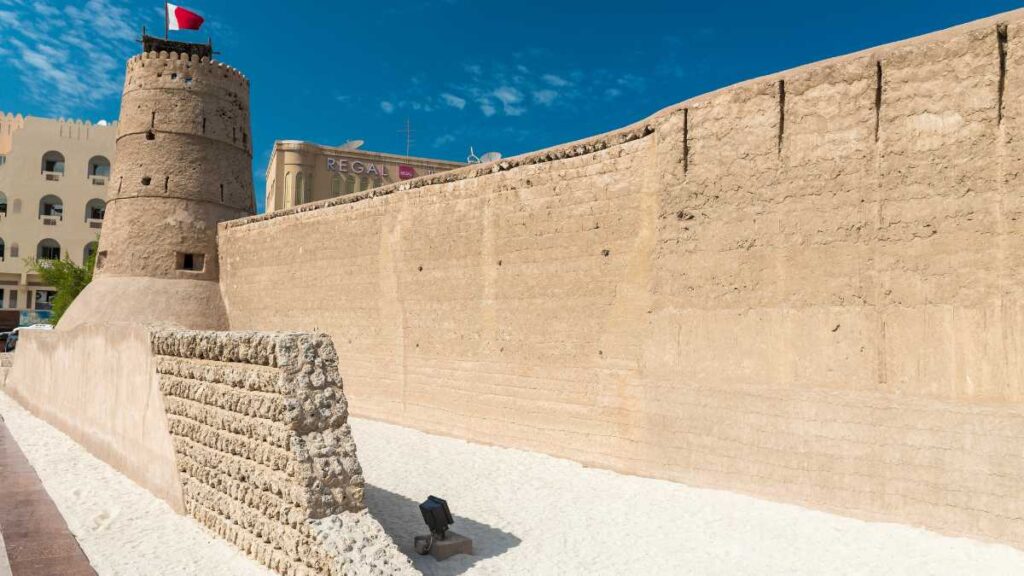
The fort originally had a large rectangular tower (the main defence structure) and three smaller round towers. Over time, it evolved into a sprawling fortified complex surrounding a central courtyard. One of the coolest features? The wind tower in the courtyard — essentially the world’s original air conditioning system. Its open sides caught the breeze and funnelled cool air into the rooms below. When it was too cold, matting was used to block the vents. Ancient HVAC, anyone?
All exhibition rooms are arranged around this inner courtyard and accessed through antique wooden doors with traditional carved designs. The architecture itself is a living exhibit — during recent renovations, artisans used traditional mortar applications to keep the authenticity intact.
What’s New in 2025: The Updated Galleries
Here’s the exciting update that makes this article worth bookmarking right now. As of November 2025, the National Museum of Ras Al Khaimah has undergone a significant transformation, with brand new and renewed galleries that make the experience more immersive than ever. If you visited a few years ago and thought it was good then — wait till you see it now.
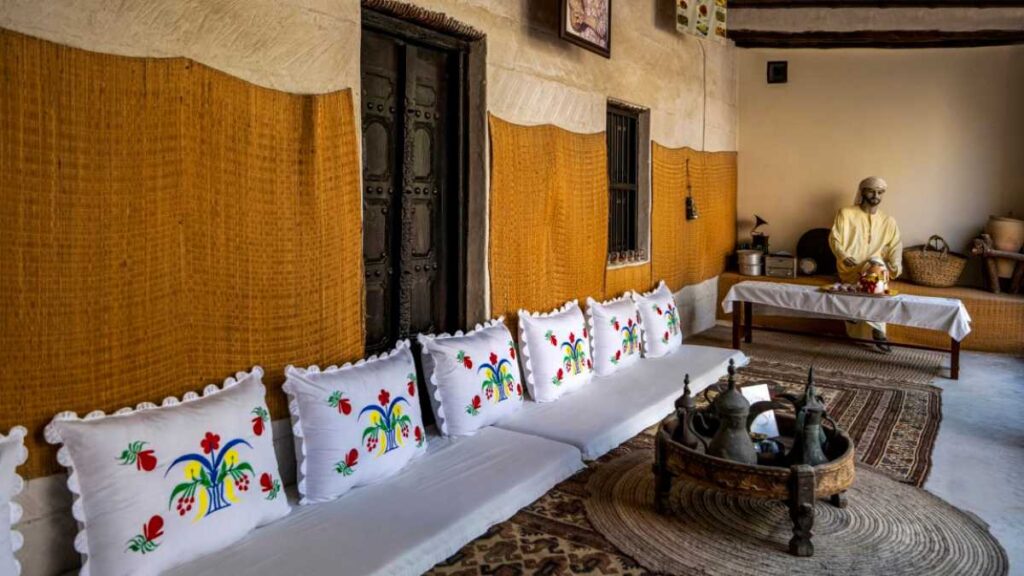
The museum now features a refreshed Welcome Area that sets the tone beautifully. You’re greeted by words from H.H. Sheikh Saud bin Saqr Al Qasimi welcoming you to his late father’s residence, giving you an immediate sense of the personal connection this place holds. The welcome space offers an overview of the emirate’s history, its people, leadership, pearling heritage, and the Qawasim’s bright trading history — all before you’ve even entered the main galleries.
The Current Galleries at a Glance
| Gallery | Type | Highlights |
|---|---|---|
| Madbasa Gallery | Permanent (Newly Discovered) | Showcases traditional date syrup-making culture and heritage |
| Julfar Gallery | Permanent | Dedicated to ancient Julfar port city — a major Arabian Gulf trade hub |
| Archaeology Gallery | Permanent (Renewed) | Artifacts dating back to 5000 BC, ancient tools, pottery, and early settlements |
| Weaponry Exhibition | Semi-Temporary | Traditional weapons from the Qawasim ruling family collection |
| Ethnography Gallery | Semi-Temporary | Traditional Emirati life — costumes, pearl diving, farming, fishing, crafts |
| Qawasim Room | Historic | Manuscripts, treaties, and documents from RAK’s ruling family and UK Government |
| Natural History Collection | Permanent | Shells, geology, and natural specimens from the region |
⭐ WOW-RAK Expert Tip
The semi-temporary galleries (Weaponry and Ethnography) are updated yearly or biannually — so each visit can offer something new! Check the museum’s latest updates before you go to see what’s currently on display. The newly discovered Madbasa gallery is a real hidden gem — it explores the fascinating traditional process of making date syrup, which was central to Emirati food culture for centuries.
Exploring the Galleries: What You’ll Actually See
The Archaeology Gallery
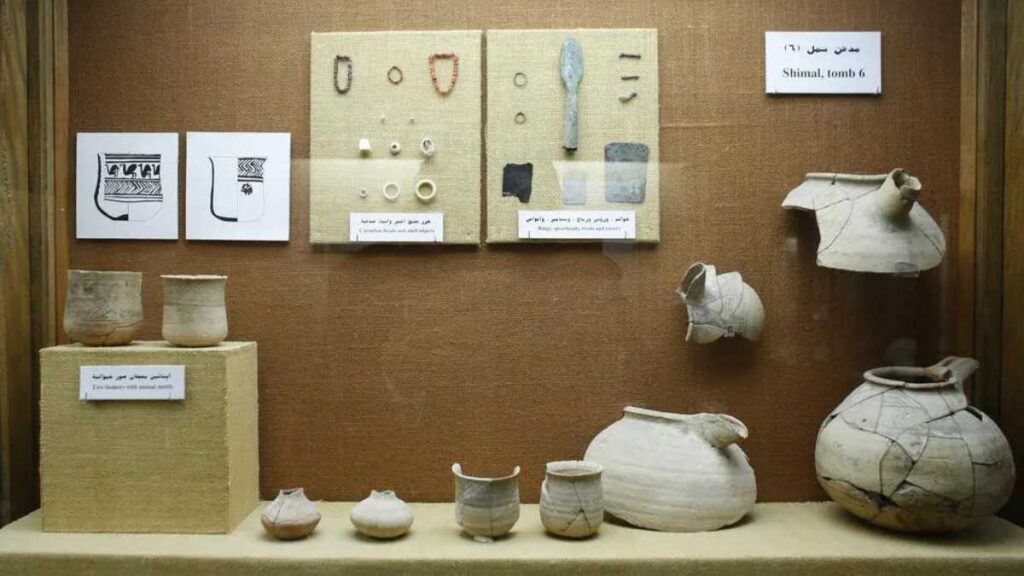
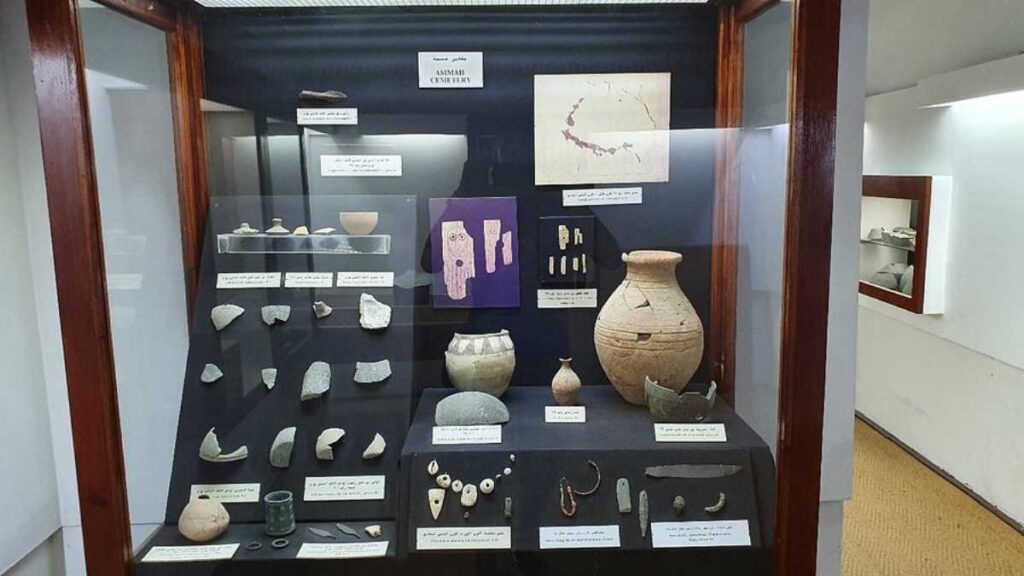
The archaeology gallery is where your jaw hits the floor. It showcases ancient artefacts and tools dating back over 7,000 years, offering a window into the lives of the earliest settlers of this region. From prehistoric tools to pottery and evidence of ancient trading routes, this gallery traces human presence in RAK from its very beginnings to the late Islamic period. It was originally set up by archaeologist Beatrice de Cardi, one of the pioneering figures in Arabian Peninsula archaeology.
The Julfar Gallery
Julfar was the ancient name for Ras Al Khaimah, and it was once one of the most strategically important port cities in the entire Arabian Gulf. This gallery brings the story of Julfar to life — from its heyday as a major trading and maritime hub to its archaeological discoveries. If you’ve ever wondered how RAK’s sailors were reaching China and India in the 10th century, this gallery has your answers.
The Ethnography Gallery
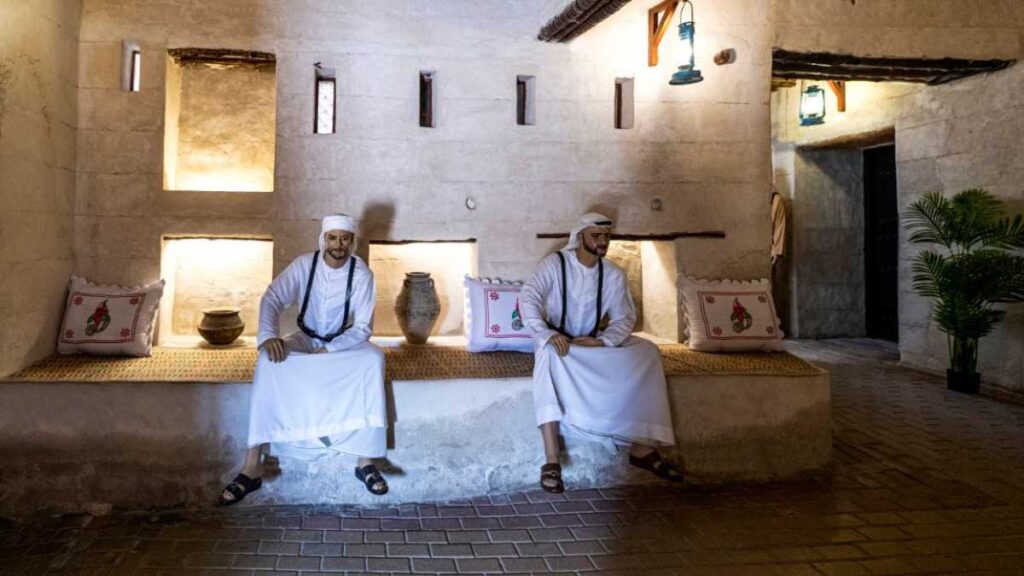
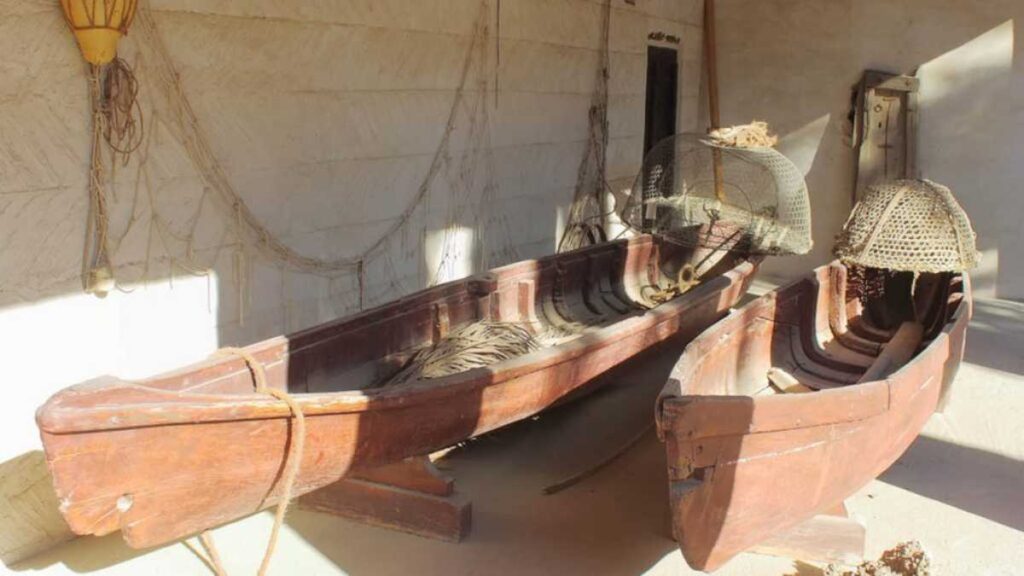
Traditional life in Ras Al Khaimah is the star of the ethnography gallery — and it’s genuinely fascinating. This is where you’ll see exhibits on architecture, pearl diving, date agriculture, farming, and fishing. Originally set up by anthropologist Walter Dostal, this gallery features traditional clothing, household items, and artefacts from local tribes and communities. The gallery reflects a way of life that seems worlds away from the gleaming skyscrapers just a short drive down the road.
⭐ WOW-RAK Expert Tip
Pearl diving was once the economic lifeblood of the entire Gulf region — and RAK was no exception. The ethnography gallery’s pearl diving exhibit gives you a genuine appreciation for just how tough and skilled these divers were. No tanks, no wetsuits — just a nose clip, a rope, and sheer determination. Next time you see a pearl necklace, you’ll look at it very differently!
The Qawasim Room
History buffs, this one’s for you. The Qawasim Room on the first floor is a treasure trove of primary historical documents — including manuscripts, treaties, and official correspondence between the rulers of Ras Al Khaimah and the British Government. You’ll also find traditional weapons belonging to the ruling family. The infamous 1820 British attack is documented here, giving visitors a frank and detailed account of RAK’s colonial-era history.
The Weaponry Exhibition
Who doesn’t love a good weapons display? The Weaponry Exhibition features traditional arms — swords, daggers, rifles — many from the Qawasim family’s private collection. The craftsmanship on these pieces is extraordinary, and the context provided about how each weapon was used in defence, hunting, and ceremony makes this one of the most engaging displays in the museum.
Natural History Collection
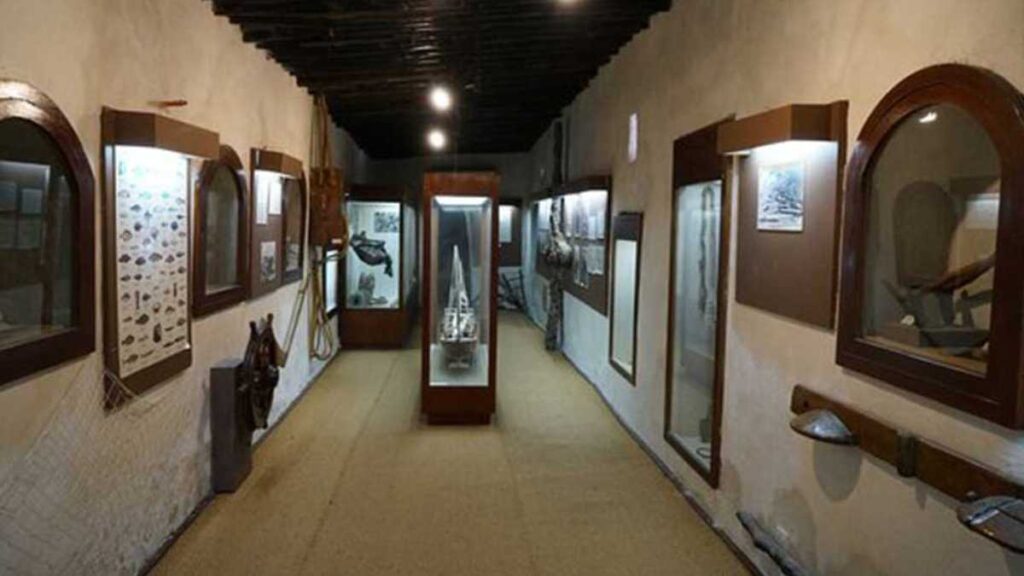
Not everything at the RAK National Museum is about battles and trade routes. The natural history collection features an impressive array of shells, geological specimens, and flora and fauna native to the region. It’s a wonderful reminder that Ras Al Khaimah’s natural landscape is just as remarkable as its human history — from the Hajar Mountains to the Arabian Sea.
The Collections: How It All Came Together
The museum’s collections are a community effort in the truest sense. Artefacts and objects were partly donated by members of the ruling Qawasim family as well as by residents of Ras Al Khaimah who understood the cultural value of what they were preserving. The Department of Antiquities and Museums has supplemented these with findings from archaeological excavations and scientific research projects carried out across the emirate.
The museum project itself was initiated in the mid-1970s by the late H.H. Sheikh Saqr bin Mohammed Al Qasimi, who was deeply aware of the profound and sweeping changes that came with the birth of the UAE as a modern state. He wanted to ensure that RAK’s rich past wasn’t swallowed up by rapid development — and thanks to his vision, it wasn’t.
⭐ WOW-RAK Expert Tip
Many of the artefacts in the museum were donated by local families — which means some of these objects come with deeply personal stories. If you get the chance to chat with a museum guide, ask about the provenance of specific pieces. You might discover that what you’re looking at once sat in someone’s home or was carried on a trading dhow across the Arabian Sea.
National Museum of Ras Al Khaimah: Opening Hours, Tickets & Getting There
Now for the practical stuff — because knowing all this history is great, but you actually need to show up at the right time with the right amount of dirhams in your pocket.
Opening Hours (2026)
| Day | Opening Hours |
|---|---|
| Tuesday – Thursday | 8:00 AM – 6:00 PM |
| Friday | 2:00 PM – 8:00 PM |
| Saturday – Sunday | 8:00 AM – 6:00 PM |
| Monday | Closed |
| First Day of Eid | Closed |
Note: Hours may vary during national holidays and Ramadan. Always check with the Department of Antiquities and Museums for the most current timings before visiting.
Ticket Prices
| Visitor Type | Price |
|---|---|
| Adults | AED 5 |
| Children (above 4 years) | AED 2 |
| Guided Tour | Free (when available) |
Yes, you read that right — AED 5 for adults. That’s less than a coffee at most cafes, and in return you get access to 7,000 years of history. Genuinely one of the best-value attractions in the entire UAE. The free guided tour (subject to availability) is an absolute bonus — take it if you can.
⭐ WOW-RAK Expert Tip
Visit on a weekday morning (Tuesday–Thursday, 8–10 AM) for the most peaceful experience. The museum is rarely crowded at that time, and the soft morning light filtering through the courtyard makes the whole place feel even more atmospheric. Bring a bottle of water — the courtyard garden is lovely for a quiet sit-down between galleries.
Location & Contact
| Detail | Information |
|---|---|
| Address | Al Hisn Road, Old Town, Ras Al Khaimah |
| Phone | +971 7 233 9900 |
| Google Rating | 4.3 ⭐ (1,543+ reviews) |
| Managed by | Department of Antiquities and Museums, RAK |
Who Should Visit the National Museum of Ras Al Khaimah?
Honestly? Everyone. But let’s break it down:
- History and culture enthusiasts will be in absolute heaven — from 5,000-year-old artefacts to ancient trade documents and British colonial treaties, this place covers it all.
- Families with children will appreciate the engaging multimedia presentations and interactive elements that make learning fun for younger visitors. And at AED 2 for kids, it’s a budget-friendly day out too.
- Architecture lovers will be mesmerised by the fort itself — the coral stone construction, wind tower, carved wooden doors, and inner courtyard are architectural gems in their own right.
- First-time visitors to RAK — if you’re new to the emirate and want to understand its culture, traditions, and identity, there is no better starting point than this museum.
- Photographers will find gorgeous light, texture, and authentic architecture at every turn — especially in the courtyard and along the outer walls.
Nearby Attractions: Make a Day of It
The National Museum of Ras Al Khaimah is located in the Old Town area, which means there’s plenty to explore nearby. Combine your museum visit with a stroll through the historic streets, a stop at the old souq, or a visit to the nearby Mohammed bin Salim Mosque — one of the oldest mosques in the area, which sits very close to the fort.
If you’re feeling adventurous, the museum also makes a great first stop before heading up to Jebel Jais for some incredible mountain scenery and activities — because in RAK, you can go from 7,000-year-old history to the world’s longest zipline all in one day. That’s just how they roll here.
⭐ WOW-RAK Expert Tip
Pair your museum visit with a walk around the Old Town area for a rich half-day of cultural immersion. The Old Town of Ras Al Khaimah has a completely different vibe from the newer parts of the city — quieter, more atmospheric, and full of old-school charm. Grab a traditional karak chai from a nearby café afterwards to complete the experience!
Frequently Asked Questions
Is the National Museum of Ras Al Khaimah worth visiting?
Absolutely. With a 4.3-star rating on Google from over 1,500 visitors, the museum consistently impresses. At AED 5 entry, the value for money is unbeatable — and the newly renovated galleries (as of 2025) make it better than ever.
How long does a visit take?
Most visitors spend between 1 to 2 hours exploring the museum comfortably. If you take the guided tour, allow a little more time. History enthusiasts might want to linger longer — and there’s a lovely courtyard garden for a break in between.
Is photography allowed inside the museum?
Photography for personal use is generally permitted. Always check with museum staff upon arrival, as some specific exhibits may have restrictions.
Is there parking available?
Yes, parking is available in the vicinity of the Old Town area. The museum is easily accessible by car or taxi from anywhere in Ras Al Khaimah city.
Is the museum suitable for children?
Yes! The museum is family-friendly with multimedia presentations, engaging displays, and interactive elements designed to make history accessible and fun for all ages. Children above 4 years pay just AED 2.
Final Thoughts: Don’t Skip This One
Look, we get it — when you’re in the UAE, the obvious temptations are the beaches, the brunches, and the billion-dirham attractions. But the National Museum of Ras Al Khaimah offers something genuinely rare in a rapidly modernising part of the world: an authentic, unhurried, deeply human connection to the past.
Walking through a fort that has stood since the early 1800s, looking at artefacts that people made and used thousands of years ago, and understanding how a small emirate on the Persian Gulf became home to one of the world’s longest-settled civilisations — that’s not just a museum visit. That’s perspective.
And hey, it costs less than your morning coffee. So really, there’s no excuse. Go visit.
⭐ WOW-RAK Expert Tip
Download the museum brochure from the official Visit Ras Al Khaimah website before you go, and check the floor plan so you can plan your route through the galleries. The museum has more on offer than first meets the eye — including upcoming planned new exhibitions in 2026. Stay curious, explore every room, and don’t rush. Some of the best stories here are told in the smallest details.
Contact and Location
Phone: +97172339900
Instagram