Last updated: April 2026
Nobody wants to think about this. But if the situation in the region escalates and you decide it is time to leave Ras Al Khaimah – temporarily or otherwise – you need a plan that you have thought through before the pressure is on.
This guide covers every realistic departure route from RAK, what happens to your visa and residency, what documents to have ready and the practical decisions most expat families face when considering an emergency departure.
Should You Actually Leave?
First, the honest answer: for most RAK residents, staying put is the safer and smarter option. The UAE’s THAAD and Patriot missile defence systems have intercepted every threat so far. Essential services are running. Banks are open. Supermarkets are stocked. Leaving in a panic creates its own risks – cancelled flights, overcrowded borders, visa complications and the very real possibility of being stranded somewhere worse.
That said, there are situations where leaving makes sense: if your embassy has issued a formal departure advisory, if you have a medical condition that requires uninterrupted specialist care, if you have very young children and the anxiety is affecting their wellbeing, or if your gut simply tells you to go. Trust that instinct – but have a plan first.
For the latest safety assessment, see: Is RAK Safe Right Now?
Your Three Departure Routes From RAK
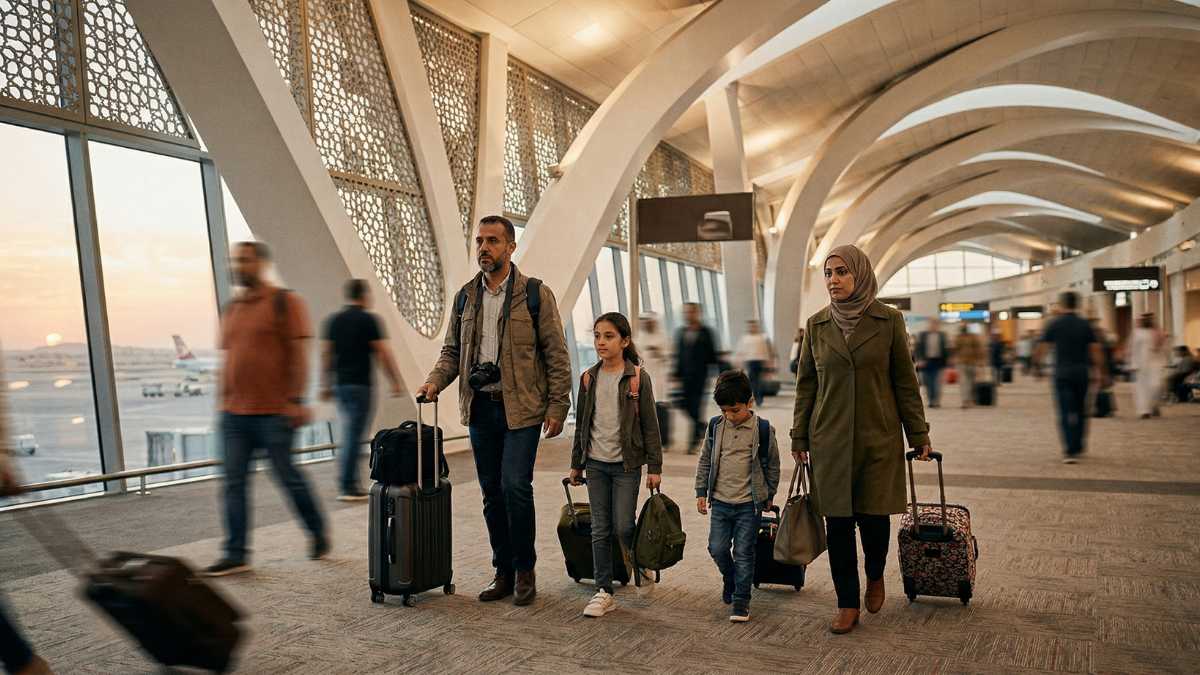
RAK residents have three realistic options: fly from RAK Airport, drive to Dubai for a flight from DXB or DWC, or cross the land border into Oman via Al Darah. Each has trade-offs depending on the situation on the ground.
Option 1: Fly From RAK International Airport
RAK Airport (RKT) operates limited commercial routes compared to Dubai. The main carriers are Air Arabia, Wizz Air Abu Dhabi and a handful of seasonal charter airlines. Direct routes are mostly to India, Pakistan, Bangladesh, Egypt and some European destinations.
In a crisis scenario, availability drops fast. If flights are running and seats are available, this is your quickest option. But do not count on it being available when you need it.
RAK Airport enquiries: +971-7-207-5200
Tip: Book a one-way ticket on your phone before you drive to the airport. Do not show up hoping for the best.
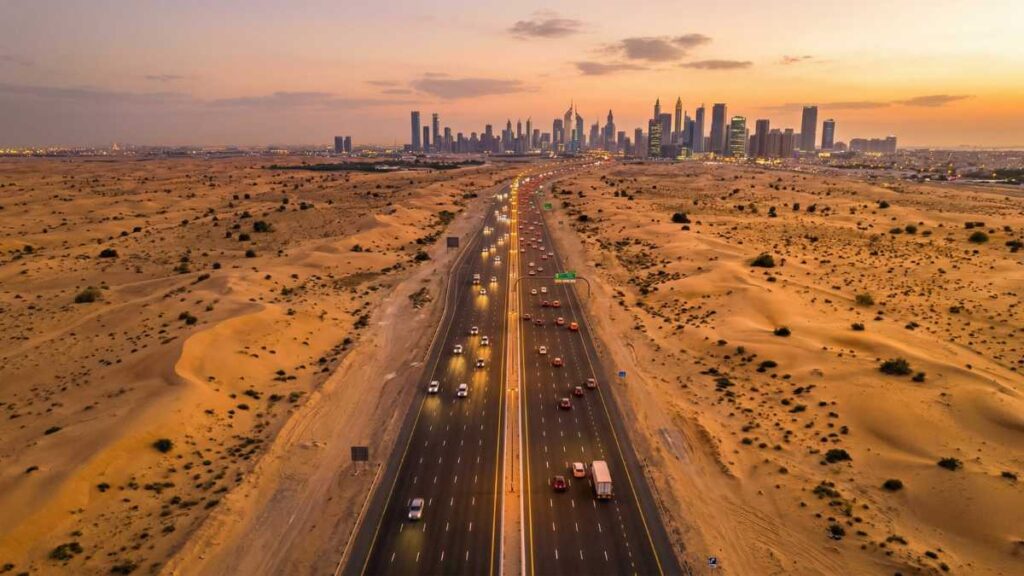
Option 2: Drive to Dubai (DXB or Al Maktoum DWC)
Dubai International Airport (DXB) is about 90 minutes from central RAK via the E311. Al Maktoum International Airport (DWC) in Dubai South is roughly two hours. DXB has far more international connections, so this is the strongest option if RAK Airport routes are not going where you need.
Route: E311 south from RAK City or E11 coastal route. In an emergency, avoid rush hour (7-9am and 5-8pm). The E611 bypass through Sharjah can save 20-30 minutes if E311 is congested.
Fuel: Fill your tank now, not when you are panicking. Keep it above half at all times during uncertain periods.
DXB enquiries: +971-4-224-5555
DWC enquiries: +971-4-814-5555
Option 3: Drive to Oman via Al Darah Border
The Al Darah border crossing connects RAK to Oman’s Musandam peninsula (Khasab). It is about 35km from RAK City and operates 24 hours. From Khasab you can take a ferry to Muscat or drive south through the Musandam mountains.
This is your land escape route if flights are grounded and you need to get out of the UAE entirely. However, there are important caveats.
You will need:
- Valid passport (not just Emirates ID)
- Oman visa or visa-on-arrival eligibility (most Western passport holders get visa on arrival; Indian, Pakistani, Filipino and Bangladeshi nationals need a pre-arranged Oman visa)
- Vehicle insurance valid for Oman (most UAE policies do not cover Oman – check with your insurer now)
- Sufficient fuel – the drive is through mountainous terrain with limited petrol stations
Important: Musandam is geographically isolated from mainland Oman. Getting from Khasab to Muscat by road means driving back through the UAE (via Fujairah) and re-entering Oman at a southern border crossing. The ferry from Khasab to Shinas or Muscat is the faster option but runs on a limited schedule.
WOW-RAK Expert Tip: If you are seriously considering departure, register with your embassy first. Several governments arranged charter flights and priority boarding for registered nationals during the March 2026 airspace closures. If your embassy does not know you are here, you are on your own.
If You Stay: Shelter-in-Place and the UAE Warning System
Most expats do not know the UAE has a national public warning system managed by NCEMA (National Emergency Crisis and Disaster Management Authority). If an emergency escalates, this is what you need to know about staying safe without leaving.
The UAE Public Warning Sirens
NCEMA and Civil Defence operate a network of sirens placed in strategic locations across the country. These sirens warn of imminent threats including air raids, missile attacks and natural disasters. There are three signals you need to memorise:
Source: NCEMA – National Emergency Crisis & Disaster Management Authority
- “Warning” signal: Move to the nearest shelter immediately. This is sent when there is an active threat at national level.
- “Out of danger” signal: The threat has passed. You can return home.
- “Important announcement” signal: Tune into local radio, television or any available media immediately for instructions from authorities.
If you hear a siren and are not sure what it means, go indoors immediately and check local media. Do not ignore it.
Four Types of Shelters in the UAE
The UAE has four designated shelter types, defined by NCEMA and Civil Defence:
- Home shelter: A designated safe area within your apartment or villa. Usually an interior room with no windows.
- Floor shelter: A common area on each floor of a building, larger than a home shelter and shared with neighbours.
- Staircase shelter: The inner fire escape staircase of a building, converted into a shelter.
- Public shelter: Built into public infrastructure – metro stations, schools, mosques, community centres, government buildings and underground parking areas.
If you are at home when a warning sounds, stay put and use your home or floor shelter. If you are outside, head to the nearest public shelter or the lobby of any solid building.
When Sheltering
- Close all gas and water sources
- Seal air vents if instructed (to protect against dust and pollutants)
- Bring water, medications and a phone charger
- Stay away from walls, windows and doors – sit in the centre
- Listen to radio or television for official announcements
- Do not leave until you hear the “out of danger” signal
If you are at home when a warning sounds, stay put and use your home or floor shelter. If you are outside, head to the nearest public shelter or the lobby of any solid building.
What to Do When Sheltering
- Close all gas and water sources
- Seal air vents if instructed (to protect against dust and pollutants)
- Bring water, medications and a phone charger to the shelter
- Stay away from walls, windows and doors – sit in the centre of the room
- Listen to radio or television for announcements from authorities
- Do not leave the shelter until you hear the “out of danger” signal
WOW-RAK Expert Tip: Most RAK apartment buildings do not have a formally designated shelter room. Your safest spot is the bathroom or a corridor with no exterior walls. Stay low, away from glass. Keep a battery-powered radio or your phone charged so you can follow official updates.
Water and Food Rationing – How It Works
In a prolonged emergency, NCEMA has the authority to activate water distribution points and food rationing. Most expats have never heard of this system, but it exists and has been planned in detail.
- Water: If water supply is disrupted, distribution points are set up near residential areas. Bring containers and collect water in an organised manner.
- Food: The government issues ration cards linked to your family’s civil register. You receive a notification, submit family documents at a registration centre, and use the ration card at authorised retail outlets.
- Gas/fuel: A similar coupon system applies for fuel – registration notification, application at a designated centre, then fuel cards for use at petrol stations.
None of this has been activated during the current situation. But knowing it exists means you will not panic if it does.
What Happens to Your Visa If You Leave
This is the question that stops most expats from leaving – and the rules are clear but not widely understood.
The 180-day rule: If you hold a UAE residence visa and remain outside the country for more than 180 consecutive days, your residence visa is automatically cancelled. You would need your employer or sponsor to apply for a new entry permit to return.
Emergency grace periods: During the March 2026 airspace closures, the UAE government issued a grace period for residents whose visas expired while they were stranded abroad. That grace period ended on 31 March 2026. If a similar situation arises again, the government has shown it will extend grace periods – but do not count on it.
Golden Visa holders: If you hold a 10-year Golden Visa, the 180-day rule does not apply. You can stay outside the UAE for longer without losing your residency.
Property owners: Owning property in the UAE does not protect your visa status. The 180-day rule applies regardless of asset ownership.
Practical advice: If you leave temporarily, set a calendar reminder for day 150. That gives you 30 days to arrange a return flight or start the re-entry process if needed.
Documents to Have Ready – Today, Not Tomorrow
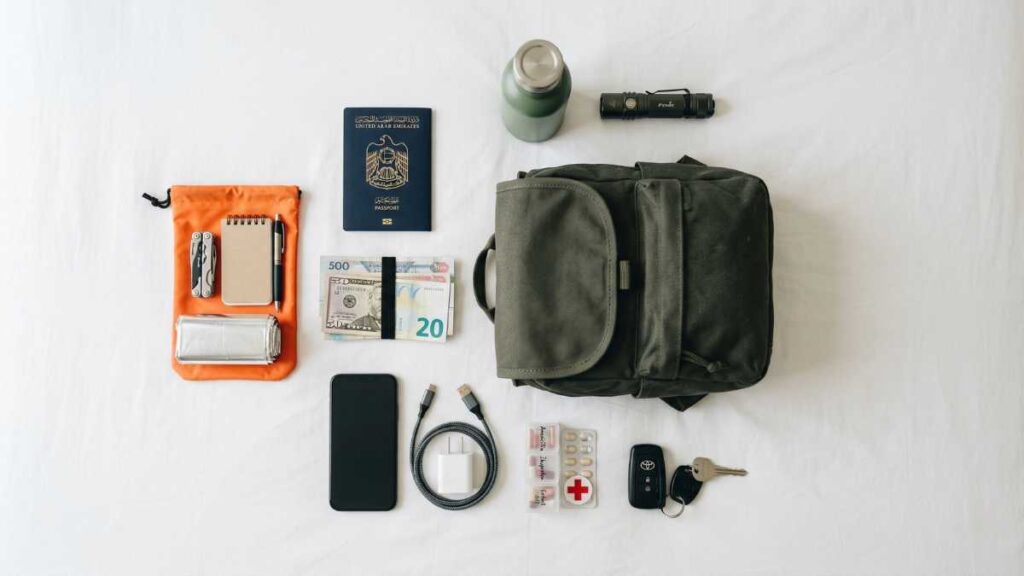
Do not wait for a crisis to gather these. Pack a go-bag with physical copies and save digital copies to your phone and cloud storage.
Essential documents:
- Passports for every family member (check expiry dates – some countries require six months validity)
- UAE residence visa page (printed or saved as PDF)
- Emirates ID cards
- Birth certificates and marriage certificate
- Health insurance cards and policy documents
- Vehicle registration (Mulkiya) and driving licence
- Tenancy contract (Ejari or equivalent)
- Bank cards and at least AED 2,000-3,000 in cash (ATMs may be down or have long queues)
- Prescription medications with the prescription itself (some medications require proof at borders)
- Pet vaccination records and microchip documentation if you have pets
Digital backups: Photograph every document and save to iCloud, Google Drive or WhatsApp (send to yourself). If you lose the physical copies, digital versions can still get you through most border checks.
Money and Banking During an Emergency Departure
UAE banks have remained fully operational throughout the current situation, but if you are leaving, think ahead.
- Withdraw enough cash to cover 5-7 days of expenses. AED and USD are the most useful currencies to carry.
- Ensure your bank cards work internationally. Many UAE-issued debit cards have international transactions disabled by default – check your banking app.
- If you use Wise, Revolut or similar multi-currency cards, load them with your home currency before you leave.
- Do not close your UAE bank account before leaving. You will need it for any ongoing payments (rent, DEWA, phone) and to receive any final salary or end-of-service payments.
For a full breakdown of banking stability, see: Is Your Money Safe in the UAE?
Leaving With Pets
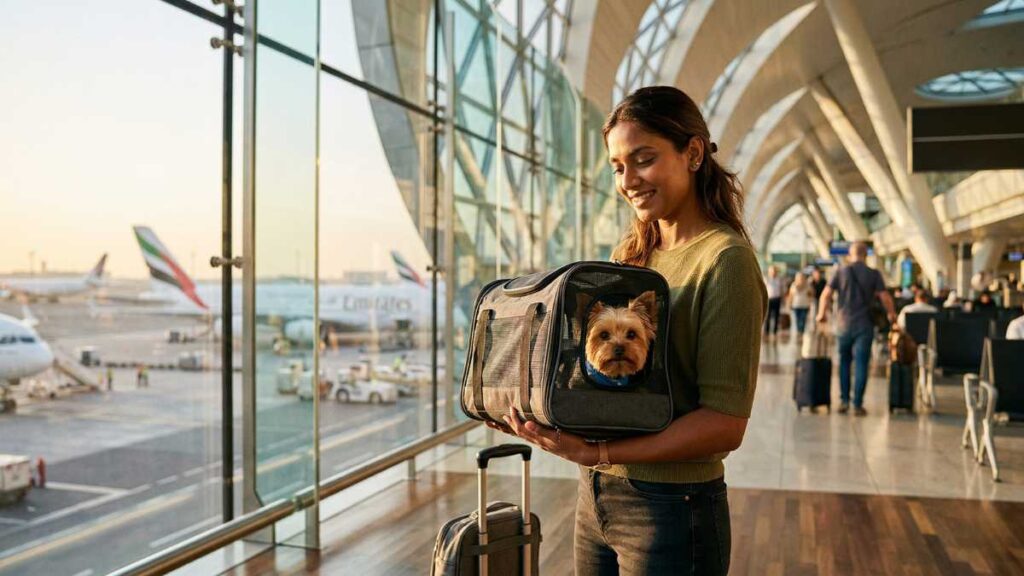
This is the hardest part for many families and there is no sugarcoating it – taking pets across borders at short notice is difficult.
- By air: Most airlines require advance booking for pets in cargo or cabin. In a crisis, cargo space fills fast. Contact your airline as early as possible.
- To Oman by car: You will need your pet’s vaccination records, microchip certificate and an export permit from MOCCAE (Ministry of Climate Change and Environment). Call 800-3050.
- If you cannot take your pet: Contact the RAK Animal Welfare Centre (+971-7-243-3184) or the RAK Pet Community groups on Facebook. The expat pet community in RAK is strong – people will help.
What to Do Right Now – Even If You Are Not Leaving
You do not need to be at the door to benefit from preparation. These steps take an afternoon and cost nothing.
- Register with your embassy. Do it today. It takes five minutes. Full guide here.
- Save all emergency numbers. Use our emergency number page to download them all to your phone.
- Pack a go-bag. Passports, cash, chargers, medications, one change of clothes per family member. Keep it by the front door.
- Fill your fuel tank. Keep it above half from now on.
- Check your Oman visa eligibility. Know before you need to know.
- Enable international transactions on your bank cards. Takes 30 seconds in your banking app.
- Tell someone back home your plan. A family member or friend who knows your intended route and destination.
Having a departure plan is not panic. It is common sense. Most RAK expats will never need to use it – and that is the best possible outcome. But if the day comes, the families who prepared are the ones who leave calmly while everyone else is scrambling.
More Guides for RAK Expats
This page is part of our complete guide series for expats living in Ras Al Khaimah:
- Is RAK Safe Right Now? – full safety assessment with defence data and practical guidance
- What Is Open and Closed in RAK – live status of schools, flights, attractions and services
- UAE Emergency Numbers for RAK Expats – every number you need, with one-tap save
- RAK Expat Crisis Guide – what to do, who to call, where to go
- Register With Your Embassy – step-by-step for every major nationality
- Is Your Money Safe in the UAE? – banking, savings and financial security
- Grocery Prices in RAK – what has gone up, what the government controls
- War Risk Insurance for UAE Residents – do you actually need it?
- Talking to Your Children About What Is Happening – age-appropriate guidance for RAK parents
- Emergency Departure From RAK – routes, flights, visas and what to pack
For the full overview, visit our Live in Ras Al Khaimah hub.
FAQs: Emergency Departure From RAK
You have three options: fly from RAK Airport (limited routes), drive 90 minutes to Dubai International Airport for more connections, or cross the Al Darah land border into Oman’s Musandam peninsula. The best option depends on available flights and the situation on the ground.
Your UAE residence visa is automatically cancelled if you stay outside the country for more than 180 consecutive days. Golden Visa holders are exempt from this rule. If your visa expires while you are abroad during an emergency, the UAE government has previously issued grace periods – but this is not guaranteed.
Yes. The Al Darah border crossing to Oman’s Musandam (Khasab) is about 35km from RAK City and operates 24 hours. You need a valid passport, Oman visa eligibility and vehicle insurance that covers Oman. Check these before you need them.
Passports for all family members, UAE residence visa copies, Emirates ID, birth and marriage certificates, health insurance documents, bank cards, cash (AED 2,000-3,000 minimum), prescription medications and pet records if applicable. Keep physical and digital copies.
Dubai International Airport (DXB) is approximately 90 minutes from central RAK via the E311 highway. Al Maktoum International Airport (DWC) is about two hours. Avoid peak traffic hours (7-9am and 5-8pm) as the drive can take significantly longer.
Move to the nearest shelter immediately – your home shelter, a floor shelter in your building or any public shelter such as a metro station, school or underground parking. Close gas and water, stay away from walls and windows and listen to local radio or TV for instructions. Do not leave until you hear the “out of danger” signal.
Yes. NCEMA and Civil Defence designate four types of shelter: home shelters within your apartment, floor shelters on each level of a building, staircase shelters using fire escape stairwells and public shelters built into metro stations, schools, mosques and underground parking areas.