Key Takeaways
- Nine essential food categories including rice, eggs, and cooking oil are legally price-controlled in the UAE and cannot increase without government approval.
- Some categories outside the nine essentials, such as fresh flowers and imported seafood, are experiencing genuine price increases due to higher shipping costs.
- UAE supermarkets are fully stocked, and there is no immediate need for panic buying; strategic stockpiles can cover essential goods for four to six months.
- Ramadan promotions are currently reducing prices on many dry goods, making it a favorable time to shop for bulk essentials.
- The UAE dirham's peg to the US dollar provides stability against currency fluctuations, protecting residents from increased import costs during regional tensions.
The WhatsApp voice notes are going around. The supermarket queues last week were longer than usual. Here is what is actually happening to food prices in the UAE right now – and what it means for your weekly shop.
When regional tensions flare, the first thing people do is check their bank balance and their kitchen cupboards. That is completely human. In the first few days of March, some UAE residents headed to their nearest Spinneys or Carrefour and bought rather more rice than usual. A few hypermarkets in Dubai briefly introduced purchase limits – no more than 2kg on loose items, four packets maximum per customer – to stop hoarding from emptying shelves for everyone else.
So the question is fair: are grocery prices going up in RAK? And should you be worried?
The honest answer is layered. Your daily staples are legally price-controlled and actively monitored. Some specific categories – fresh flowers, imported seafood, certain fresh produce – have seen genuine upward pressure due to higher air freight and shipping insurance costs. Seasonal pricing shifts are happening independently of the current situation. And counterintuitively, Ramadan discounts are actively working in your favour right now.
Here is the full picture, category by category.
What the Government Actually Said – Not the WhatsApp Version
On 28 February, the UAE Ministry of Economy and Tourism issued a formal statement. It was direct: essential food commodities are available in sufficient quantities across all markets. Supply chains are continuing without interruption. The country’s strategic reserves of essential goods will cover needs for between four and six months.
That figure came directly from UAE Minister of Economy and Tourism Abdulla bin Touq Al Marri, who has since made multiple public appearances – including a floor walk through Dubai’s Al Aweer Central Fruit and Vegetable Market – to personally confirm that imports are arriving normally and that prices on several commodities have actually recorded a decline in the days since the initial spike.
His language was unambiguous: food security and consumer rights are “a red line” for the UAE government. That phrase has a specific meaning here. It means enforcement, not just assurance.
The Nine Items That Cannot Go Up Without Government Approval

Most residents do not know this exists, but the UAE has a formal Pricing Policy for Essential Consumer Goods that has been in place since 2022. Under this policy, nine staple categories are subject to strict price controls. Retailers cannot increase prices for these items without prior approval from the Ministry of Economy and Tourism.
The nine controlled categories are: cooking oil, eggs, dairy products, rice, sugar, poultry, legumes, bread, and wheat.
These cover the core of most family shopping baskets in the UAE. The enforcement is not theoretical. Since the start of the regional tensions in late February, UAE authorities have conducted over 4,400 inspection visits across markets nationwide, recorded 554 violations – mainly relating to unjustified price increases – and have already issued 449 warnings and fines totalling AED 176,000, according to Gulf News. The enforcement machinery is actively running.
The penalty for a price violation ranges from a written warning up to a fine of AED 100,000, with the possibility of temporary business closure for serious or repeat offenders. For a major retailer, the reputational risk alone is a powerful deterrent.
The Ministry operates a real-time digital price monitoring system connected to 627 major retail outlets across the UAE – hypermarkets, supermarkets, and consumer cooperatives representing more than 90 percent of the country’s domestic trade in essential consumer goods, according to Khaleej Times. Every time a retailer updates a shelf price, the system flags it against approved benchmarks automatically.
If you see a price increase on any of the nine protected categories at your local Lulu, Carrefour, or Spinneys in RAK, report it immediately: toll-free number 8001222, via the Ministry website, or by emailing info@moet.gov.ae.
What Could Genuinely Cost More Right Now – and What to Do About It
Here is the honest section. The nine essential categories are protected. But a number of other items sit outside that policy and have seen real price movement. Knowing which ones helps you shop smarter.
Fresh flowers are one of the most exposed categories. Almost all cut flowers sold in the UAE are air-freighted – from Kenya, Ethiopia, and the Netherlands primarily. Air freight insurance costs increased sharply in early March as regional tensions raised cargo risk premiums. Florists and supermarket flower sections may have adjusted prices already, or will do so as their current stock rotates. If you buy flowers regularly, this is a category where you will likely notice a difference.
Imported seafood is similarly exposed. Local UAE-caught fish – hammour, kingfish, sheri – is on a short supply chain and completely insulated. Norwegian salmon, Sri Lankan prawns, and other imported varieties travel by air or through freight routes that have absorbed higher insurance costs. Expect modest price movement on imported seafood over the coming weeks.
Fresh juices and cold-pressed beverages sold in cafes, juice bars, and the refrigerated sections of supermarkets use imported fruits as inputs – mangoes from India, berries from Europe, citrus from various origins. Small juice bars and independent cafes tend to absorb cost increases and pass them on faster than large supermarket chains. Expect some menu price adjustments at smaller establishments.
Premium imported cheeses and specialty meats sit outside the nine controlled categories. Standard dairy is protected but French brie, Italian burrata, Australian lamb racks, and similar premium imports have no price ceiling. If these are part of your regular shop, watch for gradual adjustment.
Imported fresh herbs and specialty produce – certain herbs, baby leaves, and microgreens that are air-freighted rather than grown locally may see minor price movement. This is a small spend for most households but worth being aware of.
Baby formula from European or Australian brands is worth monitoring if you use imported varieties. This category sits outside the essential goods price controls.
Pet food – imported premium brands may see minor price movement over the coming weeks. Local and regional brands will be more stable.
Restaurant and cafe menus are not covered by the nine essential goods policy at all. Small independent restaurants absorb cost increases and often pass them on relatively quickly. Do not be surprised if a few of your regular spots quietly adjust prices over the coming month.
What Is Genuinely Fine – or Even Cheaper Than You Think
UAE-grown produce from Al Ain farms supplies significant volumes of tomatoes, cucumbers, capsicum, courgettes, and leafy greens to Lulu, Spinneys, and Carrefour. These are on short domestic supply chains with zero air freight exposure. If you shift toward UAE-origin fresh produce where available – look for the UAE flag label in the fresh section – you are largely insulated from import cost pressure.
Dates are in season, locally grown, and completely unaffected. Ramadan is precisely the time when date varieties are at their widest range and best pricing.
Dry staples covered by the nine categories are stable by law, actively monitored, and fully stocked in every RAK supermarket right now.
The Ramadan Effect: Working in Your Favour Right Now

Here is the counterintuitive part that most people are not connecting. Ramadan and the current regional situation have arrived at the same time – and Ramadan pricing dynamics are actively pushing costs down on a wide range of goods.
Every major UAE retailer runs significant Ramadan promotions. Lulu Hypermarket, Carrefour, Spinneys, and Choithrams all discount bulk dry goods, cooking essentials, oils, rice, sugar, lentils, chickpeas, and snacks heavily throughout the holy month. These promotions are competitive and genuine – retailers compete hard for Ramadan basket spend and the deals are real.
The practical result: if you are buying bulk dry goods right now, you are likely paying Ramadan promotional prices that are equal to or lower than pre-Ramadan levels. The geopolitical situation and Ramadan are pulling in opposite directions on pricing – and for the essential categories, Ramadan is currently winning.
Stock up on dry goods while the Ramadan deals are running. Not as panic buying – as sensible household management. These promotions end when Ramadan does.
Seasonal Pricing: Some of This Was Coming Anyway
It is worth separating crisis-related price movement from normal seasonal pricing, because these two things are being conflated in a lot of the current conversation.
March is a seasonal transition month for fresh produce globally. Winter crops from Europe and Central Asia are winding down. Summer supplies have not fully ramped up yet. This creates annual price softness on certain fruits and vegetables every March, completely independent of any geopolitical situation.
Strawberries get more expensive in March because the European season is ending. Certain citrus varieties become pricier as Mediterranean harvests tail off. Stone fruits from Europe have not arrived yet. This happens every year without fail. Some of what people are noticing at the checkout right now is simply the normal seasonal cycle – not a crisis effect at all.
The Dirham Peg: A Protection Most Residents Do Not Think About
The UAE dirham is pegged to the US dollar at a fixed rate of 3.67. This is a structural protection that rarely gets mentioned in conversations about food prices – but it matters enormously right now.
When regional or global tensions spike, currencies in many other countries weaken against the dollar. That makes all dollar-denominated imports immediately more expensive – a double hit of higher shipping costs plus currency depreciation hitting at the same time. That does not happen in the UAE. The dirham maintains its value regardless of what is happening regionally. Your purchasing power on imported goods does not erode through exchange rate movement.
Compare this to expats in countries with floating currencies where a regional crisis can make imports 15-20 percent more expensive overnight simply through currency movement, before any actual supply change occurs. The peg is a quiet, structural advantage that the UAE’s residents benefit from every time there is external turbulence.
“We have full stocks of all FMCG goods available in our supermarkets. Our stores operate 24 hours a day, throughout the year, and there is no reason for panic buying. We have large quantities of goods in our warehouses and imports are arriving regularly.”
-Kamal Vachani, Deputy CEO, Al Maya Group
We Have Been Here Before: What Happened in March 2020
Residents who were in the UAE during the Covid-19 lockdowns in March 2020 will remember a very similar moment. Supermarkets saw panic buying. Pasta, rice, and tinned goods cleared off shelves. There were queues and purchase limits. WhatsApp groups were full of warnings about shortages that never actually materialised.
Within two to three weeks, supply chains adjusted, shelves were fully restocked, and prices on most categories returned to normal or below normal as demand stabilised. The UAE’s food security infrastructure – the same strategic stockpiles, the same diversified import network, the same government enforcement mechanisms – absorbed the shock and moved on.
That precedent is directly relevant now. The infrastructure is the same. The government response in 2026 has been faster and more publicly coordinated than in 2020. The enforcement is already producing results. If history is a guide, the current moment of heightened anxiety will look very different in a fortnight.
Shop Smarter: Where to Find Better Deals Right Now
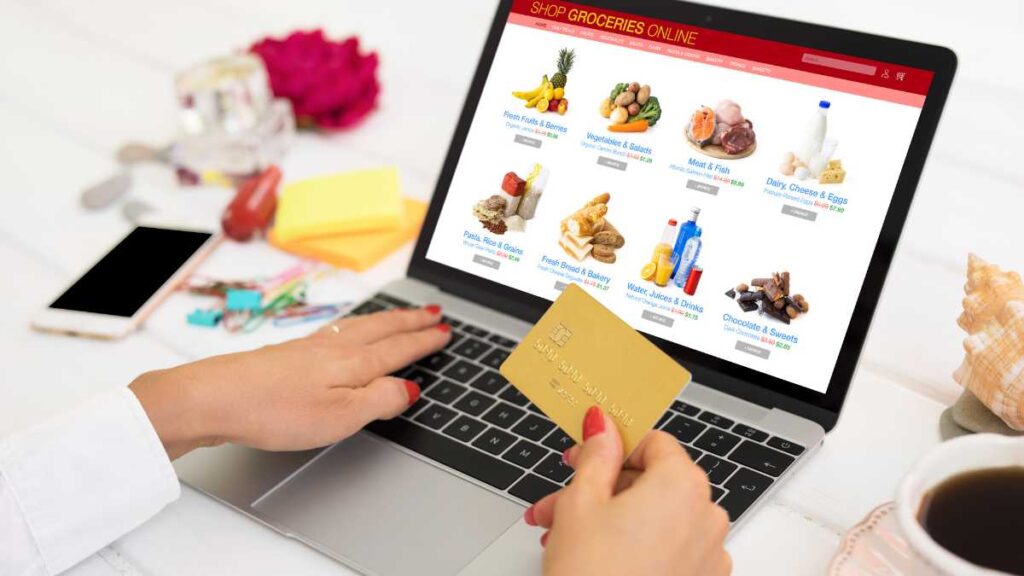
Check marketplace apps before your supermarket run. Noon, Amazon.ae, and Talabat Mart all carry dry goods, pantry staples, and household essentials. The app price on a 5kg bag of rice or a case of bottled water is frequently 10-15 percent cheaper than the equivalent shelf price at a physical hypermarket – and this gap tends to widen during periods of high in-store demand when shelf restocking lags slightly. Delivery is often same-day or next morning in RAK.
One caveat worth knowing: be aware of surge pricing dynamics on delivery apps during peak demand periods. The price on a popular item at 6pm on a Friday may differ from the same item at 10am on a Tuesday. If you are not in a rush, shop off-peak for the best prices.
Expat community bulk-buying groups are worth joining if you are not already in one. RAK’s Indian, Filipino, and South Asian expat communities in particular run well-organised informal buying arrangements through WhatsApp groups – pooling orders for bulk rice, lentils, and cooking oil from wholesale suppliers at prices well below retail. If prices do edge upward over the coming weeks, these networks activate quickly. Ask in your building group or community Facebook page.
Ramadan offers at hypermarkets end with the holy month. If you want to stock your pantry at the best prices of the year, the next few weeks are the window. Buy bulk dry goods now while the promotions are running, and you will have paid less than you would have in April regardless of what happens with regional tensions. <div class=”wow-expert-tip”>
WOW-RAK Expert Tip: The UAE-origin label in the fresh produce section of Lulu and Carrefour is your best friend right now. Al Ain farms supply tomatoes, cucumbers, capsicum, and leafy greens on short domestic supply chains with zero air freight exposure. These items will be the most price-stable and the freshest on the shelf. When in doubt at the fruit and vegetable counter, buy local first.
What This Means for Your Weekly Shop in RAK
Your rice, eggs, oil, bread, sugar, dairy, chicken, and legumes are price-controlled and actively monitored. Those prices should not change. If they do at your local store, report it to 8001222.
Fresh flowers, imported seafood, premium imports, fresh juices, and cafe menus are the categories most likely to see genuine price movement. These are real but manageable – and none of them are things you need every week to run a household.
Fresh produce prices may fluctuate modestly as shipping insurance costs work through the supply chain, though the Minister’s visit to Al Aweer market on 7 March confirmed prices are already falling back on several commodities as new shipments arrive.
There is no shortage of any food category in RAK. The supermarkets are fully stocked. You do not need extra supplies beyond your normal weekly shopping. If you want to build a modest pantry buffer, do it now while Ramadan promotions are running – not because of any shortage, but because the prices are the best they will be all year.
FAQs
The nine essential categories – rice, eggs, cooking oil, dairy, poultry, sugar, bread, wheat, and legumes – are price-controlled and cannot be increased without government approval. Some categories outside these nine, including fresh flowers, imported seafood, premium imports, and cafe menus, have seen modest upward pressure due to higher air freight and shipping insurance costs. Normal seasonal pricing shifts in March are also a factor independent of the current situation.
The UAE Minister of Economy and Tourism confirmed a four-to-six month strategic stockpile of essential goods. Major retailers including Al Maya Group confirmed three-to-five months of buffer stock for key staples, with individual retailer warehouse stock adding a further 40-60 days on top.
Often yes, particularly for dry goods and pantry staples. Noon, Amazon.ae, and Talabat Mart are worth checking before your weekly shop. The price difference on bulk items can be 10-15 percent, and shopping off-peak avoids any surge pricing.
Report it to the Ministry of Economy and Tourism via the toll-free number 8001222, the Ministry website, or email info@moet.gov.ae. Since the start of the regional tensions, enforcement teams have already conducted over 4,400 inspection visits and issued significant fines to non-compliant retailers.
In terms of initial consumer behaviour – yes. In terms of actual supply threat – no. The UAE’s food security infrastructure is stronger now than in 2020, the government response has been faster, and the underlying supply chains have not been disrupted. In 2020, the situation normalised within two to three weeks. That is the most likely outcome now.
Modestly, possibly, on categories outside the nine controlled essentials – particularly if regional tensions persist for several months. This would be gradual and the government is actively monitoring for unjustified increases. Ramadan deals are a buffer for the next few weeks, and buying bulk dry goods now is the most practical hedge available.
For the full picture on the current regional situation and what it means for RAK residents, read our anchor guide: Is RAK Safe Right Now?. For general legal and financial questions as an expat in RAK, see our Top Legal Questions for Expats guide.